
It’s an all too common occurrence - walking into a room and wondering why we came here in the first place; trying to recall a person’s name we just bumped into in the street or going shopping after forgetting to take our shopping lists with us and struggling to recall what it was we really needed! This type of forgetfulness happens to most of us. Being overly stressed or tired can exacerbate these manifestations which seem to increase as we get older. Infact, a study by Age UK showed that nearly 20% of people over 65 are suffering from a mild cognitive impairment in some shape or form (1).
Occasional instances of short-term memory loss are most likely a normal part of ageing. Many of us however, worry about brain health and are seeking out steps we can take to keep our brain functioning well. Here, we look at some actions you can take to boost your brain-power.
DIET
Just as the rest of your body requires proper nutrition for optimal function, your brain benefits from a well-rounded intake of nutrients supplied by a wholesome diet. If your diet isn't as nutritionally balanced as it could be then taking a good quality multivitamin is an alternative way to fill in the nutritional gaps.
Consider increasing your intake of fruits and vegetables such as berries, leafy green vegetables and tomatoes. These provide protective antioxidants which can further support your brain. Oily fish, flaxseed and walnuts supply brain-boosting omega-3 fatty acids which convert to EPA & DHA. These are vital for the maintenance of normal brain function. Fatty acids are found in abundance in the membranes of brain cells and are responsible for preserving cell membrane health and facilitating communication between brain cells.
LIFESTYLE
Keep Active
A University of British Columbia study found that regular aerobic exercise can actually increase the size of the brain area involved in verbal memory and learning. Furthermore, exercise can help to reduce insulin resistance, reduce overall inflammation, and even promote growth of new blood vessels in the brain. Exercise can also improve mood and quality of sleep while also reducing stress and anxiety - both of which can cause a negative impact on cognitive function. If you are unable to undertake aerobic, rigorous exercise then perhaps consider regular walking, stretching or yoga.
Use brain enhancing games or apps. Crossword puzzles, regular reading, chess, Sudoku, Scrabble or word searches can all help to strengthen memory & improve concentration. There are many smartphone apps designed for promoting brain health, and, according to The Alzheimer’s Society, regular mind exercises may actually lower your risk for developing dementia.
VITAMINS, MINERALS & SUPPLEMENTS
Ginkgo biloba
Derived from one of the oldest-known species of trees, ginkgo biloba is an incredibly popular herbal extract with a long history of use for memory support and circulation. Rich in antioxidant compounds known as flavonoids and terpenoids, Ginkgo can help maintain and improve circulation to the brain, supporting healthy brain function and performance.
Phosphatidylserine
A fatty substance naturally produced by the body and also found in foods such as soya lecithin, barley, meat and dairy products. This phospholipid covers and protects brain cells while also carrying messages between neurons. Phosphatidylserine is believed to play an important role in keeping your mind and memory sharp.
Acetyl-l-carnitine
Derived from an amino acid that is naturally produced by the body, this antioxidant may protect the brain cells from oxidative damage while also contributing to energy production. Furthermore, Acetyl-l-Carnitine is thought to promote healthy blood flow to the brain, thereby enhancing working memory, cognitive performance and mental clarity. A 3 month study conducted on patients diagnosed with dementia, showed that daily Acetyl-l-carnitine supplementation showed a considerable improvement in cognitive assessment scales. (2)
B Vitamins
B-vitamins are believed to lower plasma levels of the amino acid homocysteine. Higher levels of homocysteine are thought to be a risk factor for brain atrophy, cognitive impairment and other age-related brain problems.
In one study, individuals with cognitive impairment and relatively high levels of homocysteine were treated with folate, vitamin B6 and B12. Results showed a slowing of brain atrophy over time [3].
Lion’s Mane Mushrooms
Lion’s Mane mushroom has a long-standing reputation as a brain-supporting agent believed to be largely down to its concentration of hericenones and erinacines. These substances are thought to increase levels of brain-derived neurotrophic factor which helps to protect against brain atrophy while also forming new neural connections in the brain to facilitate learning and memory.
A 2009 double-blind, placebo-controlled study in adults diagnosed with ‘mild cognitive impairment’, supplementation with Lion’s Mane mushroom was found to significantly improve cognitive function during the 16 weeks study period [4]
Featured Brain Health Product 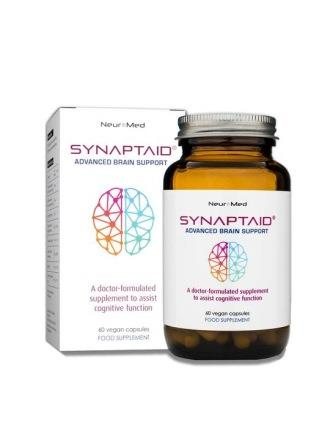
Synaptaid Advanced Brain Support
This first-of-its-kind supplement was designed by Dr John Briffa, a doctor, journalist and author with 30 years’ experience in natural medicine. He formulated Synaptaid on the basis of research, as well as his work in clinical practice. It was specifically developed for those experiencing issues such as poor memory, cognitive impairment, and brain fog. It is also suitable for those who wish to enhance their overall brain function and reduce the likelihood of future problems.The active ingredients in Synaptaid include Lion’s Mane mushroom, lithium orotate, folate, vitamin B6, vitamin B12, iodine and vitamin D - each of which has a role to play in supporting and assisting memory, concentration and mood. Synaptaid landed on our shelves a few weeks ago and has been a popular choice for those seeking to improve a particular aspect of cognitive function - such as poor memory, or for those looking to protect their brain and prevent problems in the future.
If you have any questions on any information contained here, please call us on 01224 590886 or drop us an e-mail at sales@grampianhealthstore.co.uk
Information contained on this website are for informational purposes only. The purpose of this website is to promote greater understanding and knowledge of various health topics. It is not intended to be a substitute for professional medical advice, diagnosis or treatment. Always seek the advice of your GP or other qualified health care professional with any questions you may have regarding a medical condition or treatment and before undertaking a new health care regimen, and never disregard professional medical advice or delay in seeking it because of something you have read on this website.
References:
1) Age UK, Dementia and Cognitive Decline Report, 2014, Available at: ttps://www.ageuk.org.uk/globalassets/age-uk/documents/reports-and-publications/reports-and-briefings/health--wellbeing/rb_oct14_cognitive_decline_and_dementia_evidence_review_age_uk.pdf
2) Gavrilova SI, Kalyn IaB, Kolykhalov IV, Roshchina IF, Selezneva ND. (2011) [Acetyl-L-carnitine (carnicetine) in the treatment of early stages of Alzheimer's disease and vascular dementia]. Zh Nevrol Psikhiatr Im S S Korsakova. 111(9):16-22.
3) Smith A.D., Smith S.M., de Jager C.A., Whitbread P., Johnston C., Agacinski G. Homocysteine-lowering by B vitamins slows the rate of accelerated brain atrophy in mild cognitive impairment: a randomized controlled trial. PLoS One. 2010;5:e12244
4) Mori K, et al. Improving effects of the mushroom Yamabushitake (Hericium erinaceus) on mild cognitive impairment: a double-blind placebo-controlled clinical trial. Phytother Res 2009;23(3):367-72